
Understanding how our planet works
Our goal is to understand and respond to environmental changes at various scales through a comprehensive, science-based sustainability curriculum. As an ESS student, you’ll gain hands-on research, internships, and fieldwork experiences, equipping you with practical skills for impactful ecosystem management, all while collaborating with leading professionals who will position you at the forefront of innovation.
Undergraduate degrees
-

Ecosystem Science and Sustainability | B.S
The Ecosystem Science and Sustainability degree combines ecosystem science with real-world decision-making, giving you an understanding of ecosystem and watershed science for a more sustainable future.
-

Watershed Science and Sustainability | B.S
The Watershed Science and Sustainability program prepares you to understand and address today’s freshwater challenges. Build the knowledge and skills to help protect water resources and the landscapes that depend on them.
-

Accelerated Master's Program | B.S to Professional Science Master's
The Accelerated Master’s Program in Ecosystem Science and Sustainability is a unique, fast-track degree pathway that allows undergraduates in eligible CSU degree programs to start earning a Professional Science Master’s, while still enrolled as an undergrad.
Minors
-

Geospatial Information Science for Natural Resources
Develop fundamental geospatial skills in GIS, GPS, and remote sensing to support natural resource science, management, and today’s workforce.
-

Diversity and Inclusion in Natural Resources
Advance inclusion, environmental justice, and equitable natural resource management.
-

Watershed Science
Protect and sustainably manage freshwater resources.
No results match the selected filters.
Outcomes
Our B.S. degrees combine in-depth scientific expertise in ecosystem ecology with practical applications. You graduate with:
- An understanding of ecosystem and water science for effective conservation strategies.
- Skills in data analysis, modeling, and geospatial research methods.
- Experience working collaboratively with communities for sustainable ecosystems and watersheds.
90%
have a positive experience in their program
88%
secure plans in their field after graduation
$45,028
is the average entry-level salary of an ESS undergraduate
Undergraduate student resources
- Advisor support: Award-winning advisors work together to help you navigate your degree program.
- Professional development: You can pursue an internship, engage in research, and/or make an impact through service alongside your studies.
- Impactful learning: Join student organizations, learning communities, campus activities, and events to expand your network and build skills in your field.
Graduate degrees
-

Ecosystem Sustainability
Apply ecosystem and environmental science to address complex social and ecological challenges.
-

Watershed Science
Apply watershed and environmental science to real-world water and natural resource challenges.
-

Professional Science Master’s
Gain career-ready skills in ecosystem science and sustainability with a flexible in-person or distance option.
-

Ecosystem Sustainability
Conduct original research that advances ecosystem and environmental science and addresses complex sustainability challenges.
-
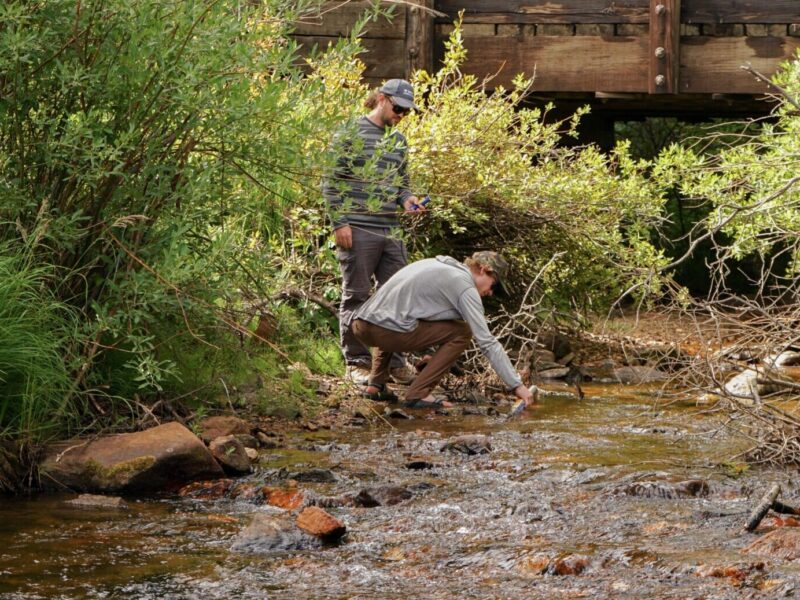
Watershed Science
Learn complex strategies for understanding the physical, chemical, and biological factors that affect the quantity, quality, and flux of water.
No results match the selected filters.
Graduate certificates
-

Carbon Management
Measure, manage, and reduce greenhouse gas emissions while helping organizations advance their sustainability and climate goals.
-

Water Resources
Analyze, manage, and protect water resources through sustainable planning and policy.
No results match the selected filters.
Outcomes
Our M.S. and Ph.D. programs are designed to equip you with the knowledge and tools to tackle today’s most urgent environmental challenges.
Whether you’re interested in a research-focused path or seeking to apply your skills through a professional degree, there’s a program for you.
97%
have a positive experience with advising and mentoring related to their professional development
95%
secure plans related to their program after graduation
$71,725
is the average salary of an ESS graduate student
Become a
Leader in sustainability
“As we work to heal the earth, the earth heals us.”
Robin Wall Kimmerer, botanist and author