

Fast facts & stats
Build the scientific, analytical, and professional skills to address complex sustainability challenges through the Professional Science Master’s in Ecosystem Science and Sustainability in the Department of Ecosystem Science and Sustainability. Choose an in-person or distance option and tailor your studies to your career goals through focus areas in:
- Carbon management
- Climate adaptation and risk management
- Water resources
- Sustainable food systems
Develop in-demand skills in environmental data science, modeling, policy analysis and interdisciplinary problem-solving while applying what you learn to real-world sustainability challenges through internship experience rather than a thesis.
3
Complete the 36-credit program in as little as three semesters.
300
Gain 300 hours of internship experience with a business, government agency, nonprofit, or other organization.
2
Customize your experience with two degree options: in-person or distance.
Elevate Your Career
Explore what you’ll study and the skills you’ll gain to advance your career and help build a more sustainable future.
Program highlights
-

Receive Career support
Career Services
Prepare for your next career step with professional development built into the PSM. Build practical skills, grow your network and access career support through Warner College Career Services and the CSU Career Center.
-

Hands-on experience
CSU Mountain Campus
Kick off your degree with a hands-on learning experience at the CSU Mountain Campus the week before fall semester begins. Connect with fellow students from both PSM programs, build community, and explore ecological concepts firsthand.
-
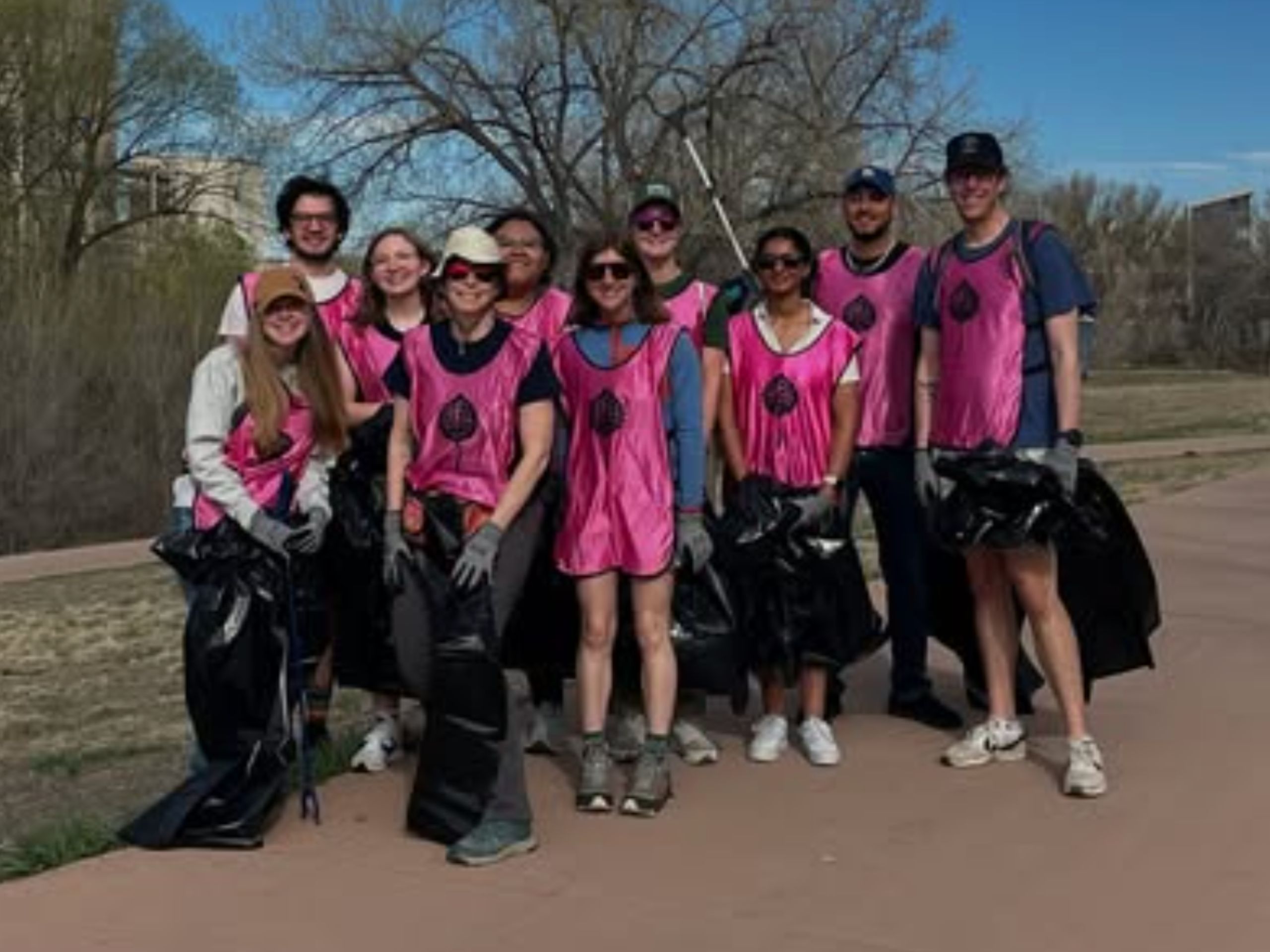
Find your People
WESS Club
The Watershed-Ecosystem Science and Sustainability Club brings together students who are passionate about sustainability and watershed science. The club offers opportunities for networking, volunteer work, and leadership.
Alumni



No results match the selected filters.
Degree focus areas
- Carbon Management
Build practical skills to measure, manage, and reduce greenhouse gas emissions across sectors such as government, business, and agriculture. Also explore carbon policies and strategies that help organizations and communities meet their emissions goals. - Climate Adaptation and Risk Management
Learn to assess climate risks, identify vulnerabilities, and develop strategies that strengthen resilience. Apply current science to create practical, equitable solutions for communities, ecosystems, and organizations across a range of sectors. - Sustainable Food Systems
Explore the connections between food systems, climate, water, and energy while building skills to evaluate sustainability challenges. Use data to improve resource use, reduce environmental impacts, and support more sustainable food production and distribution. - Water Resources
Develop data science and management skills to address complex water challenges. Explore the social, physical, chemical, and ecological dimensions of water systems while developing solutions for sustainable water use in agriculture, urban areas, and conservation.
Internship details
How it works
Instead of completing a thesis, you’ll gain hands-on experience through a 300-hour, three-credit professional internship with an academic, government, business or nonprofit organization. Most students complete their internship during their final summer, working about 30 hours per week for 10 weeks.
Internships are not guaranteed to be paid, but many students secure paid positions. Some students also receive job offers from their internship organizations after completing the program.
Internship placement and locations
You’ll receive support throughout the internship search and placement process from a faculty advisor and internship coordinator. They’ll help you prepare for professional opportunities, identify positions and connect with potential host organizations.
As part of the process, you’ll build skills in:
- Finding and applying for internship opportunities
- Networking with prospective employers and host organizations
- Developing a professional resume
- Creating a strong LinkedIn profile
Internship experiences vary by organization and role. Some include fieldwork, such as collecting samples or taking measurements, while others focus on data analysis, assessment and other applied skills related to your career goals.
Students have completed internships with organizations including:
- United Nations Framework Convention on Climate Change
- National Park Service
- HXE Partners
- American Carbon Registry
- NextGen ESG
- Denver Water
- Agricultural Water Quality Program at CSU
- The Climate Trust
- City of Fort Collins
- Lynker
- Colorado Department of Public Health
- Northern Water
- Soil Carbon Solutions Center
- The Nature Conservancy
- Ducks Unlimited
Professional development and career services
The PSM helps you build practical career skills, professional tools and industry connections throughout the program. You’ll have access to structured resources and support, while taking an active role in shaping your career path.
Professional development includes:
- Resumes and cover letters: Build and refine application materials through ESS 500, ESS 587, curated resources and LinkedIn Learning.
- LinkedIn profile development: Create and strengthen a professional profile tailored to sustainability and environmental careers.
- Portfolio development: Build a digital portfolio that showcases projects and applied work completed during the program.
- Professional networking: Learn networking strategies and connect with industry practitioners, instructors and employer partners.
- Internship and job searching: Access opportunities through the private ESS-PSM LinkedIn group, department communications, faculty networks and employer partnerships.
- Career coaching: Explore career planning in ESS 500 and access additional support for interviewing, salary negotiation and job preparation through Warner College Career Services and the CSU Career Center.
Sustainability graduate certificates
Customize your Professional Science Master’s experience further by adding a graduate certificate that is aligned with your interests and career goals. Students in the Carbon Management and Water Resources focus areas often complete the related Carbon Management or Water Resources certificates.
Beginning in spring 2027, students can also pursue the new Environmental Data Science certificate to build additional skills in environmental data analysis and applied data science.
-

Carbon Management
Measure, manage, and reduce greenhouse gas emissions while helping organizations advance their sustainability and climate goals.
-

Water Resources
Analyze, manage, and protect water resources through sustainable planning and policy.
-

Environmental Data Science
Uncover meaningful insights and advance sustainable solutions by gaining the skills needed to analyze environmental data.
No results match the selected filters.
Admissions information
Program requirements
- Completion of a bachelor’s degree
- Minimum cumulative undergraduate GPA of 3.0 on a 4.0 scale
- GRE is not required
Application materials and deadlines
- Application deadline
- Apply by Feb. 1 for full consideration for scholarships, grants, and other potential financial support. The department may accept applications after this date, but funding opportunities may be limited. It is recommended to submit your application well before the deadline.
- Nonrefundable application fee
- $60 for domestic applicants; $70 for international applicants
- The university does offer an application fee waiver. Visit the fee waiver request site to see if you qualify.
-
How To Apply: Graduate School
Graduate School application resources, including requirements, deadlines, and a checklist guide.
-
Application Fee Waiver
Some Graduate School applicants can skip the fee and apply for free. Learn which memberships or affiliations will allow you to waive the fee.
No results match the selected filters.
Tuition
Distance program
- Tuition and fees vary by course and credit hour. Your total tuition costs will depend on the number of credits you take and the department’s course offerings.
In-person program
- As of Fall 2026, the program can cost as little as $15,000 per year for tuition and fees for Colorado residents taking nine credits per semester.
- Newly admitted students from eligible Western states and territories may qualify for Colorado resident tuition through the Western Regional Graduate Program.
- Tuition and fees are based on CSU’s graduate cost of attendance. Students also pay a differential tuition fee each semester, which directly supports the program and its students.
-
Tuition and fees
Calculate tuition and fees for undergraduate and graduate programs at CSU.
-
Western Regional Graduate Program
Allows eligible students from 16 Western states and territories to pursue select out-of-state graduate programs at no more than 150% of resident tuition.
-
Cost of Attendance
Calculate the cost of attendance at Colorado State University for full-time students based on your major, living situation, and other variables.
-
Differential tuition
Differential tuition is tuition charged to students according to the specific courses they take after they have reached 60 credit hours.
No results match the selected filters.
Student veterans
- Visit the registrar’s Military and Veteran Residency webpage regarding the GI Bill.
-
Military and Veteran Residency
Information regarding the GI Promise Act Tuition Adjustment, in which all honorably discharged veterans and their dependents who show established domicile in Colorado shall be granted in-state tuition status.
No results match the selected filters.
Scholarships and financial aid
The Professional Science Master’s is a professional, nonresearch degree, so tuition remission and dedicated Graduate Teaching or Research Assistantships are generally not available. Students should plan to fund the program through personal resources, loans, and scholarships. Teaching assistantships may occasionally be available.
CSU, Warner College, and external organizations offer scholarships for students in natural resources. Deadlines, eligibility requirements and award amounts may vary by year.
Important financial aid dates
- Oct. 1: The CSUSA scholarship application and FAFSA open for the following academic year.
- March 1: CSUSA applications are due, and this is the priority FAFSA deadline for maximum aid consideration.
- Mid-March: Financial aid awards may begin appearing in RamWeb for review and acceptance.
-
CSU Scholarship Application (CSUSA)
The CSUSA is an online application for many of the scholarships at CSU.
-
Free Application for Federal Student Aid (FAFSA)
FAFSA forms, deadlines, and FAQs.
No results match the selected filters.
International students
International applicants may have additional admission requirements, including English language proficiency test scores. Applicants can also access resources designed to support the transition to CSU.
-
International Student and Scholar Services
Support and resources for international students, including immigration guidance, arrival and orientation resources, forms, advising information, and opportunities to connect with the CSU community.
No results match the selected filters.
Frequently asked questions
Can I work part-time while pursuing the Professional Science Master’s?
Many students choose to work part-time while completing their PSM. If you’re working full-time, it’s certainly possible to succeed in the program, but you should expect it may take longer than the typical three semesters to complete due to your professional commitments.
Do I need to know how to code to enter the program?
No. Students do not need coding experience to begin the PSM in Ecosystem Science and Sustainability.
The core curriculum includes a five-credit introduction to data science that builds foundational skills for working with large environmental datasets, primarily using R. Students can also strengthen their skills through the department’s Coding Club and recommended LinkedIn Learning courses.
